
Embracing Robert
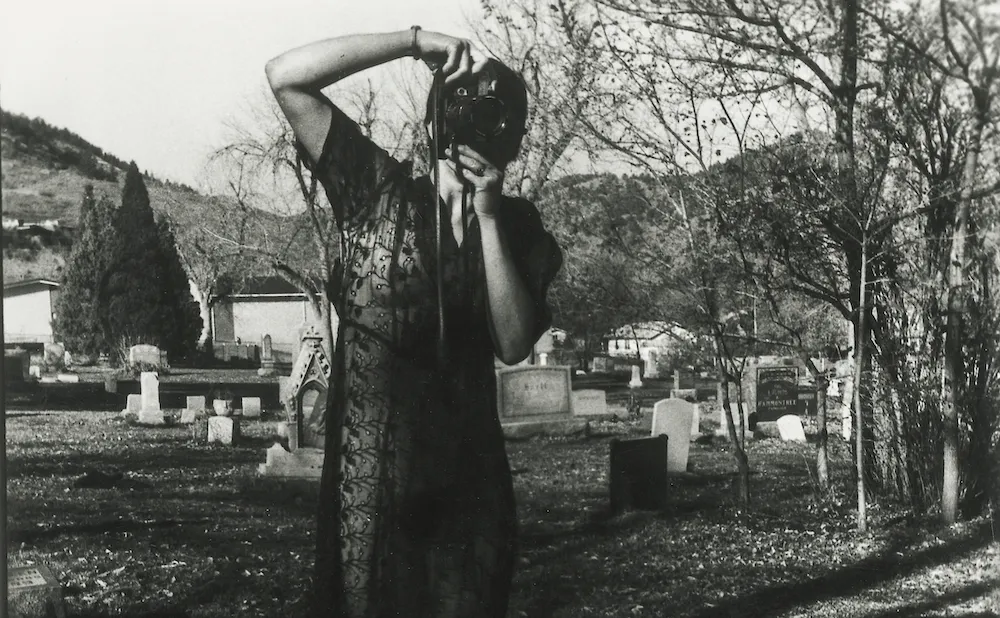
I am a stage performer. I love being in front of the camera, not behind it. The spotlight has always drawn me – perhaps that’s why, in my spare moments, I like to become Anna. Your eyes are headlights, and the great bed is the stage from which we lift off together toward Venus.
But before The Meetings with Anna, there is a required prelude, far more down to earth than a trip to the seventh heaven: the game of virtual seduction that plays out on the illuminated surface of a screen between two people who, most often, have never seen each other. That is precisely the game you and I are playing right now.
Like a modern day siren, I must lure you into my nets—but don’t worry, my nets are soft, smooth, warm and comfortable, you’ll feel dangerously at ease in them, believe me. I have to stir you, excite you, make you want to meet me in person. While you await the discovery of my facial features, the velvet of my skin, the scent of my neck and the texture of my laugh, I wield two tools: my words and my images.
Writing, and having photographers whose aesthetic matches mine, capture me, this was an immediate certainty—no different from the showcase required by my profession. An artist must stage herself not only on the proscenium but also off it; it’s part of the job, as they say.
Conversely, having to play the social media game to this degree feels less familiar to me. I have always preferred to keep my head in the clouds, captivated by the sky rather than a phone screen.
Yet Anna must prove she exists, that she truly is who she claims to be, that she regularly lounges in lingerie within sumptuous hotels, and that she looks exactly like the photos on her website. She has no choice but to follow the current trend: photos taken by me, in the moment. This sense of immediacy masquerades as authenticity, even though it is wholly manufactured. Our modern society is riddled with such paradoxes.
“Oh no,” I thought at first, when I realized I would have to submit to this exercise. “Do I really have to take selfies?”
I can’t recall ever considering taking a photo of myself with a phone before Anna entered my life; I have always looked down on the practice a little. As a performer, I embrace my narcissistic side onstage, but I try to mute it when I’m offstage. Generally, I rarely take pictures. I simply don’t think about it, and on the rare occasions I do, the result feels disappointing compared with the power of the lived moment. I’m not a photographer. I prefer to retain impressions, sensations, emotions. I may try to translate them into words, but not always—the blur can be intense too. It is often a clearer way to keep memories vivid.
Then I remembered the long tradition of self portraits, which spread through painting from the 14th century onward before finding a home in photography.
With a lump in my throat from an unexpected surge of emotion, I revisited the self portraits of countless artists—from Artemisia Gentileschi to Vincent van Gogh, from Leonardo da Vinci to Frida Kahlo, via Albrecht Dürer, Rembrandt and Caravaggio. They stand in front of us, embedded in their own canvases, surrounded by objects dear to them, immortalised forever in their work. Eternal.
Until the first daguerreotype self portrait by Robert Cornelius—so modern, so audacious. Taken in the early 19th century, Robert appears alive before us, eyes locked onto ours, hair still tousled as if he had just leapt from bed, possessing a dangerously contemporary beauty despite having lain dormant for over a century. He could have sent us that image right now, a selfie, to say hello.
Of course, where the classic self portrait belonged to a slow, deliberate process intrinsic to the artist’s practice—created in solitude and intended for a limited audience—the selfie is captured swiftly and instantly broadcast to the masses, judged and liked. Consequently we tend to give the public, or rather our followers, exactly what they want—a mindset almost opposite to the artist’s. The composition, reflexivity, and perspective that structured our ancestors’ self portraits are devoured by the deconstructive rush of speed. Art has ceded ground to communication.
Haste, immediacy, instant dissemination—ironically, for someone who has made slowness the primary virtue of her life (me!), this feels ironic. Yet irony, so long as it does not slip into cynicism, remains a creative force, a force of life. Irony is the spice of existence.
Taking photos of myself. Staging Anna, magnified in her suroundings. Leaving a trace, as all those humans before us have tried to do. Transmitting vitality. Embracing Robert.
That’s it, I said to myself.
Let us reveal a fragmented self portrait of Anna, think like Georges Pérec, pierce windows of authenticity in the mirror lure of the Internet, while striving to transcend these foreign, vain, sterile concepts of content, communication, reel. I will resist the path laid out by algorithms—I never communicate better than face to face, skin to skin, eye to eye. I am not an advertiser. I favour intuition, fluidity, and cinematic screens over commerce.
I focus on moments of life—slices of happiness and sensuality. I aim to capture a few of those brilliant, burning instants, my escapades as Anna. From those secret peaks, forever lifted by you and me.
I refuse to dissolve into another disembodied image. I want to emerge more alive, sharing quotes, aphorisms, artworks I love. I wish to convey an aesthetic, Beauty—arguably even an emotion. Futile, perhaps, but maybe Beauty isn’t as harmless as we think. Maybe Beauty can make the world itself more beautiful. In a world that can feel so dark, don’t poetry, joy and pleasure illuminate and show the way?
A reflection in an old, scratched mirror. A Droste effect. An ambiguous—or harmonious—piece of décor. Lingerie fragments. A corner of a tablecloth. A completely empty plate. Crumpled silk sheets. A cufflink. A glass of wine, still full, soon to be emptied. A dress tossed into a ball on the floor. Abandoned high heels. An arch.
That is what I can show, while a nipple peeks in the background, while in the subtext plump buttocks protrude from the fabric, while at the junction of two thighs a wetness gathers and fingers explore, while a red painted mouth swallows a penis to the hilt, tongues intertwine, deep kisses are exchanged, bodies interlock greedily. Saliva, hair, sweat, orgasms—and above all, lots of laughter.
Mirrors see it all: the real ones that capture my image, the ones that fill your imagination, and the ones that will unfurl on your retina should we ever meet.
Mirrors. Reflections.
Mirrors, reflections, reflections. More reflections.
